Heating and cooling from one ground source system.
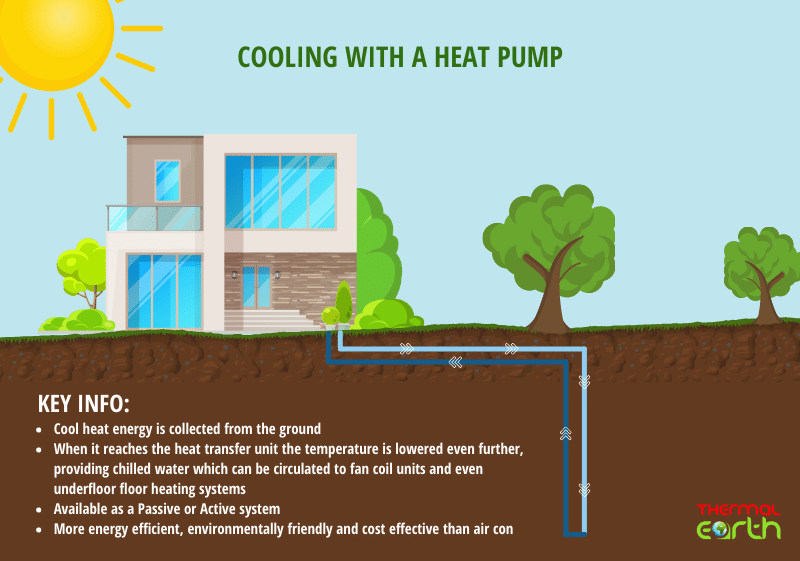
A ground source heat pump can run in reverse: the same boreholes that warm a building in winter carry its excess heat back into the ground in summer. Passive or active, it replaces standalone air conditioning with one coordinated system.
Passive and active cooling solve different problems.
Neither route is universally better — the right choice depends on how hot the building gets and how tightly it must be controlled.
Passive cooling
Also called free cooling. The brine circulates through the ground collectors, where the naturally cooler earth chills it before a heat exchanger turns it into chilled water for the building. The compressor never runs — only the circulation pump — so the energy use is minimal.
- Very low running cost — only circulates fluid
- Recharges the ground with heat for more efficient winter heating
- Simple integration with an existing ground source system
- Gentler than active cooling — best for buildings that do not overheat severely
Active cooling
The heat pump's evaporator and condenser circuits are reversed, so the compressor actively extracts heat from the building and transfers it into the ground through the boreholes or collectors. The result is performance comparable to conventional air conditioning, held at a set temperature.
- Maintains a set cooling temperature
- Performance comparable to traditional air conditioning
- Higher running cost than passive, still below standalone AC
- Capacity is bounded by the ground array's ability to absorb heat — a design-stage calculation
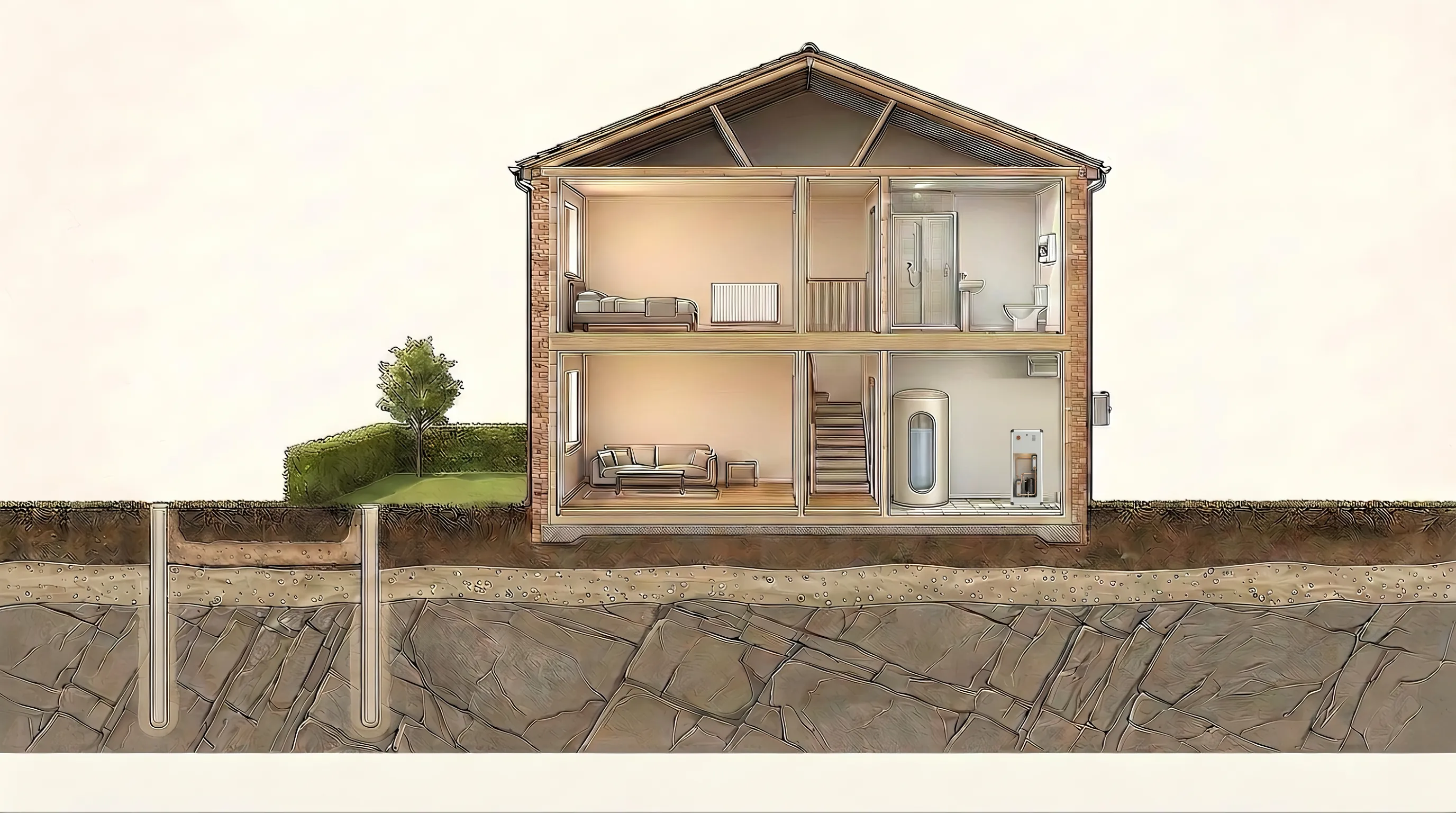
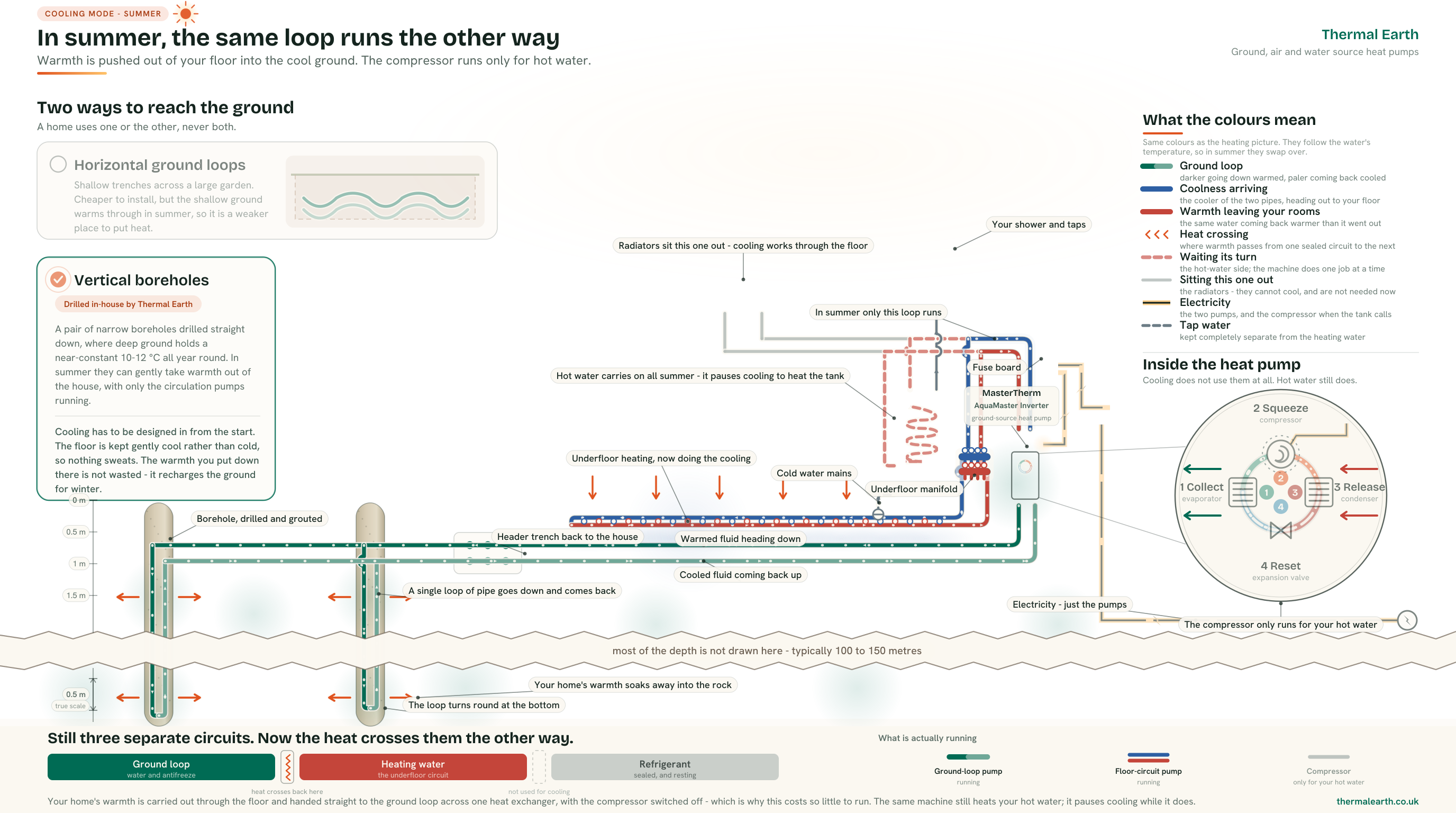
Scroll the picture sideways to see all of it. Every label is written out below.
How a ground-source heat pump cools the same house in summer - passive cooling
What is in the picture
- Ground loop: warmed fluid down the boreholes, cooled fluid back Borehole, drilled and grouted; Header trench back to the house; A single loop of pipe goes down and comes back; The loop turns round at the bottom; Cooler fluid going back down; Warmed fluid coming up
- Floor circuit: cool water out to the floor, warmer water back Underfloor manifold; Hot-water cylinder; Heating coil - heating water never mixes with your tap water; Underfloor heating in the screed; Radiator; Warm water out; Cooler water back
- Electricity from the grid, running the pumps Electricity from the grid; Fuse board
- Tap water, kept completely separate from the heating water Your shower and taps; Cold water mains
- Refrigerant sealed inside the heat pump, resting
The four steps inside the heat pump
- 1 Collect evaporator Environmental energy warms the refrigerant until it boils. It leaves as a warm gas at low pressure.
- 2 Squeeze compressor Electricity drives the compressor, squeezing that gas into a much smaller space. It leaves hot and at high pressure.
- 3 Release condenser The hot gas hands its heat to your heating water and condenses. It leaves as a hot liquid, still at high pressure.
- 4 Reset expansion valve A valve drops the pressure and the liquid flashes cold. It leaves as a cold mist, ready to collect more.
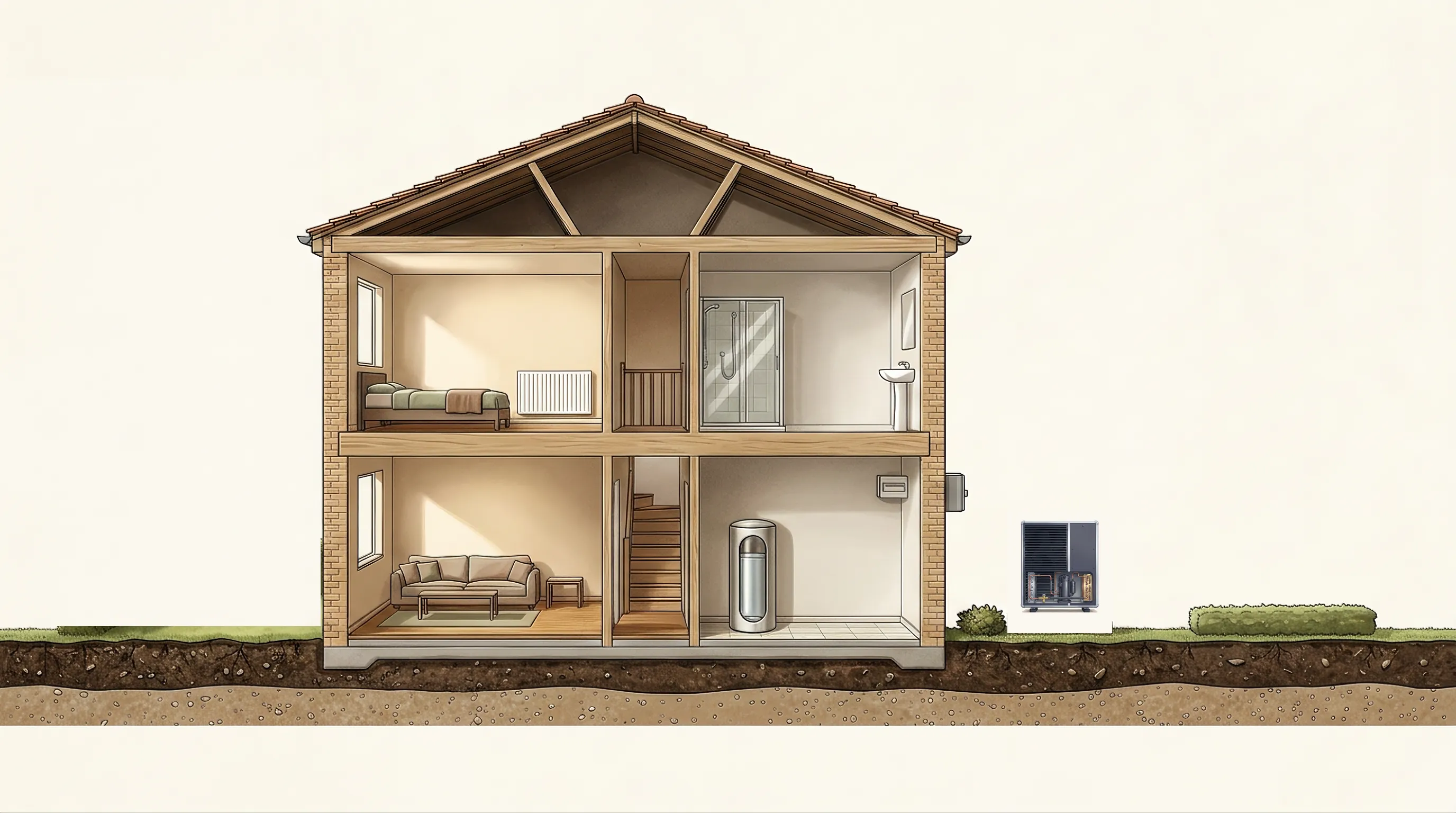
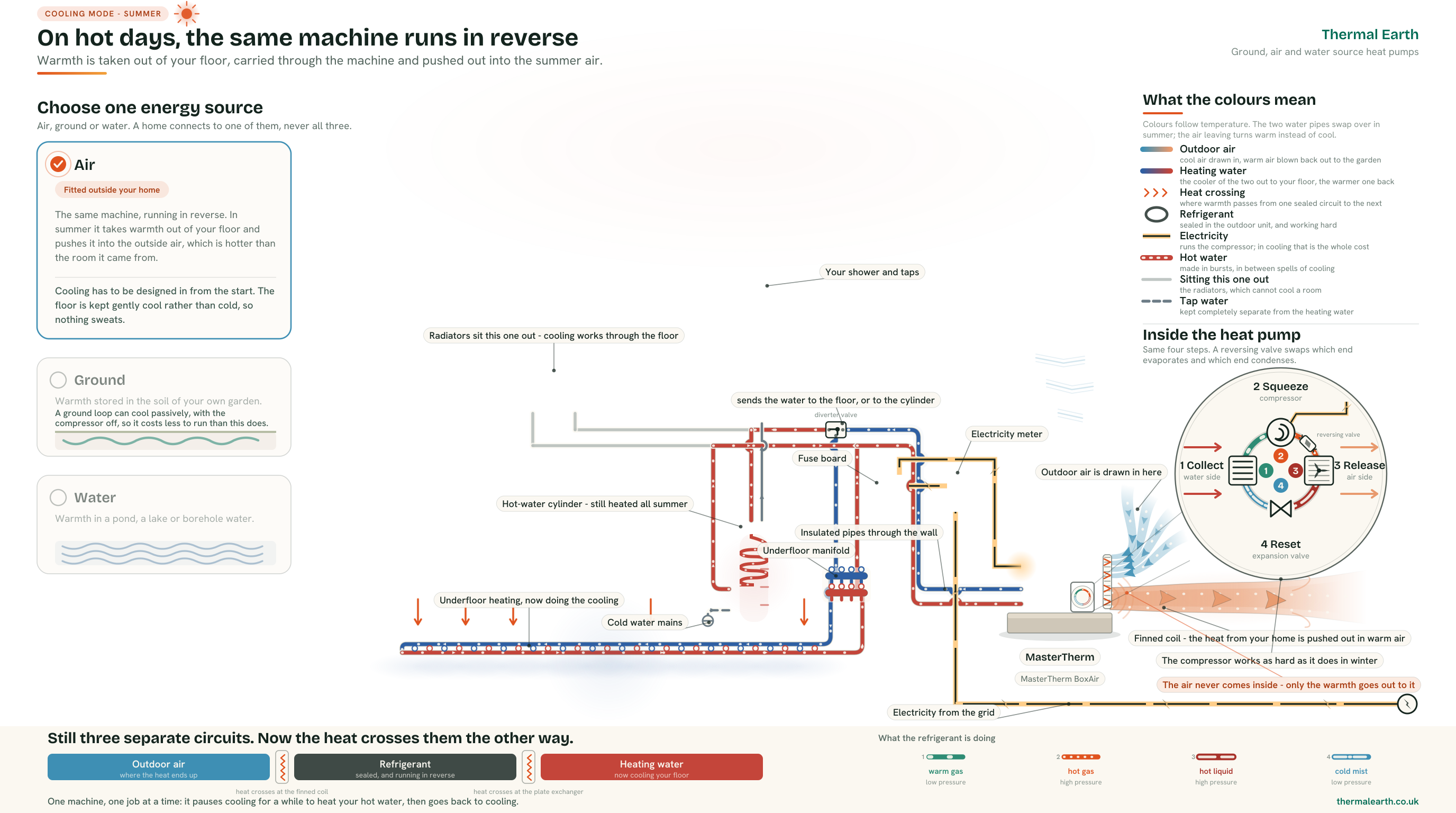
Scroll the picture sideways to see all of it. Every label is written out below.
How an air-source heat pump cools the same house in summer
What is in the picture
- Floor circuit: cool water out to the floor, warmer water back Insulated pipes through the wall; Hot-water cylinder; Heating coil - heating water never mixes with your tap water; Underfloor heating in the screed; Underfloor manifold; Radiator; Warm water out; Cooler water back
- Electricity from the grid, running the compressor Electricity meter; Fuse board; Electricity from the grid
- Tap water, kept completely separate from the heating water Your shower and taps; Cold water mains
- Outdoor air: in at the coil cooler, out again a few degrees warmer Outdoor air is drawn in here; The same air is blown out here, a few degrees cooler; Finned coil - the air gives up its warmth here
- Refrigerant sealed inside the outdoor unit, running in reverse
The four steps inside the heat pump
- 1 Collect evaporator Environmental energy warms the refrigerant until it boils. It leaves as a warm gas at low pressure.
- 2 Squeeze compressor Electricity drives the compressor, squeezing that gas into a much smaller space. It leaves hot and at high pressure.
- 3 Release condenser The hot gas hands its heat to your heating water and condenses. It leaves as a hot liquid, still at high pressure.
- 4 Reset expansion valve A valve drops the pressure and the liquid flashes cold. It leaves as a cold mist, ready to collect more.
The ground is a natural coolant.
Below around 15 metres the earth holds a near-constant 10–12°C all year — far cooler than summer air. That difference is what a ground source system uses to cool a building without fighting the weather.
There is a second benefit: every kilowatt of heat moved into the ground in summer pre-charges it for winter, so the heating season starts from a warmer source and runs more efficiently. Boreholes and water-source collectors perform best on cooling duty, because they typically interface with groundwater and transfer heat at much higher rates.
How the cooling reaches the rooms.
Fan coil units
Compact room units blow air over a coil carrying chilled water — rapid, controllable cooling similar to a conventional air-conditioning terminal, powered by the heat-pump system.
Underfloor cooling
Chilled water circulated through underfloor heating pipes provides gentle, even cooling. A dew-point controller manages the water temperature so the floor never falls below the condensation threshold.
Specified at design stage
Not every heat pump has cooling capability built in. Cooling must be specified early so the right equipment, emitters and controls are included from the first drawing.
One system instead of two.
Heating, cooling and hot water from a single plant — not a heating system plus a separate air-conditioning installation.
One plant, three duties
Heating, cooling and hot water from the same system — saving plant space, capital cost and maintenance overhead.
Lower running costs
Passive cooling uses barely any electricity; even active cooling runs below a standalone air-conditioning system doing the same job.
Summer pays for winter
Heat rejected in summer is stored in the ground and extracted back in winter — a seasonal cycle that improves year-round performance.
Quiet and discreet
No banks of outdoor condenser units. Ground source plant sits inside or underground and operates near-silently, with zero on-site emissions.
Cooling at scale: data centres
Server halls need resilient, efficient cooling around the clock — and reject heat that can be recovered. Data centres get their own dedicated page.
Explore data centresPlanning a ground source installation?
Cooling capability starts with the ground array. See how we design and install ground source heat pump systems end to end.
Explore GSHP installationCooling with a heat pump, answered.
One system for heating and cooling? Start with the load.
Tell us what needs cooling, when it runs and the conditions it must hold. We will tell you whether passive, active or a mix fits your site.