Homeowners and self-builders
Start with the property, heating requirement and space available for a ground-source system.
Get a free estimateFrom site feasibility and borefield design to drilling, loop installation, grouting, testing and records, one Thermal Earth team joins up the ground array with the heat pump it must serve.
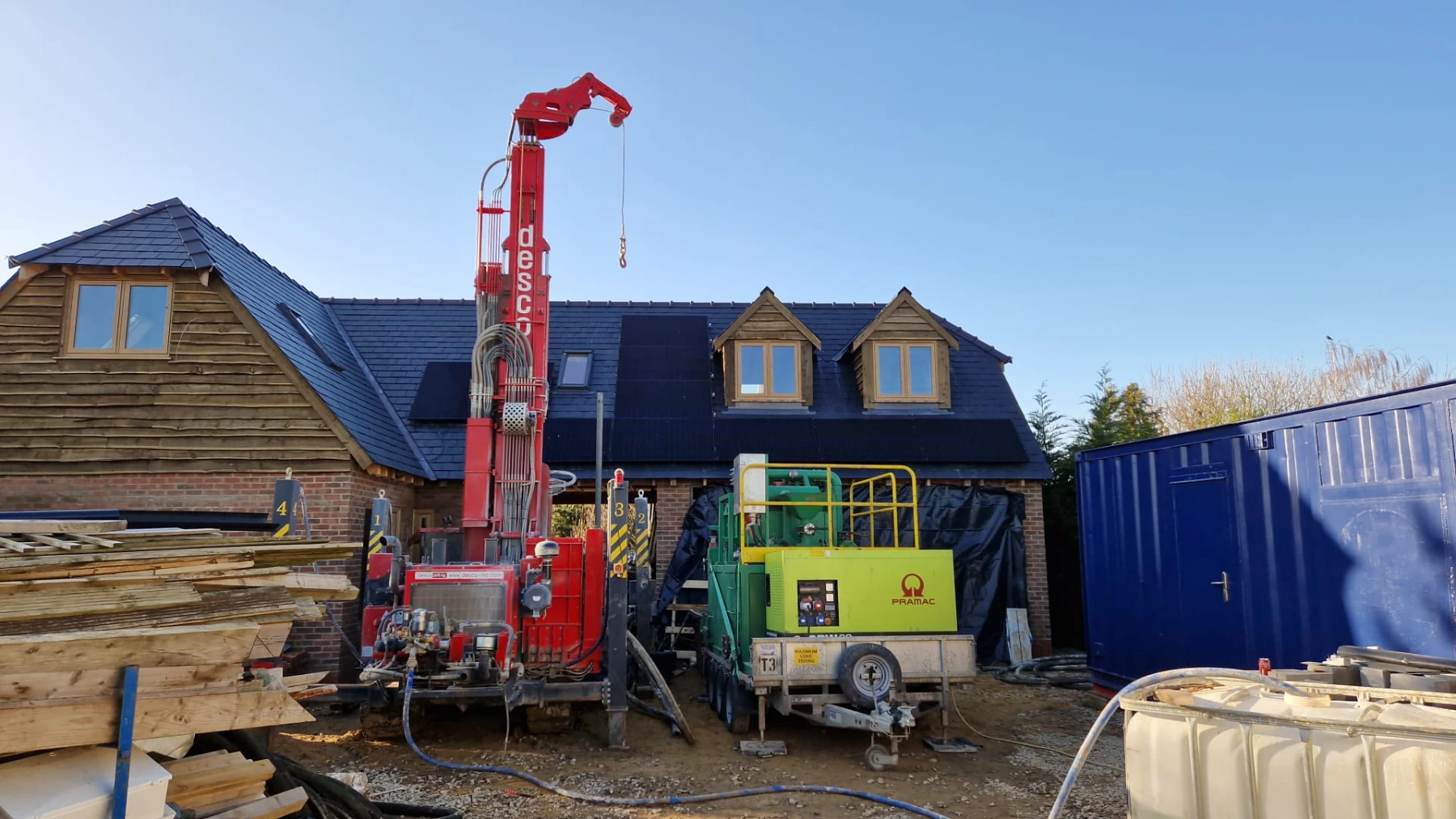
Thermal Earth's in-house team drilling for a ground-source project.
A sealed collector loop is installed in the borehole and connected through buried headers and a manifold to the heat pump.
The borefield is not selected from a universal depth-per-house rule. Heat demand, annual energy use, geology, groundwater conditions, spacing and the system operating profile all influence the design.
Explore system designStart with the property, heating requirement and space available for a ground-source system.
Get a free estimateCoordinate a drilling and collector package with the system your team will install.
Discuss a drilling packageAssess borefield strategy, shared infrastructure, access and programme at development scale.
Request a consultationExplore ground-source, groundwater or heat-recovery opportunities around the site's operational needs.
Request a consultationVertical boreholes can reduce the surface area needed for a ground array, but they still require suitable access, working space and a site-specific design.
The building's peak load and annual energy requirement establish what the ground array must deliver.
Available geological, hydrogeological and site information informs the likely drilling method and design assumptions.
Rig access, working space, buried services, structures and the route to the plant room are reviewed early.
Planning, environmental, water, noise and site constraints vary by location and project type and must be checked.
The detail changes with the geology and project, but the responsibilities and quality checks should be clear before mobilisation.
Review demand, ground information, access, services, borefield layout and permissions.
Agree working areas, sequencing, site responsibilities and water or spoil management.
Select the drilling and casing approach around the ground conditions encountered.
Install the specified collector and grout the borehole using the agreed materials and method.
Join headers and manifold, then complete the specified pressure, flow and integrity checks.
Provide the agreed borehole, collector and test information for the project record.
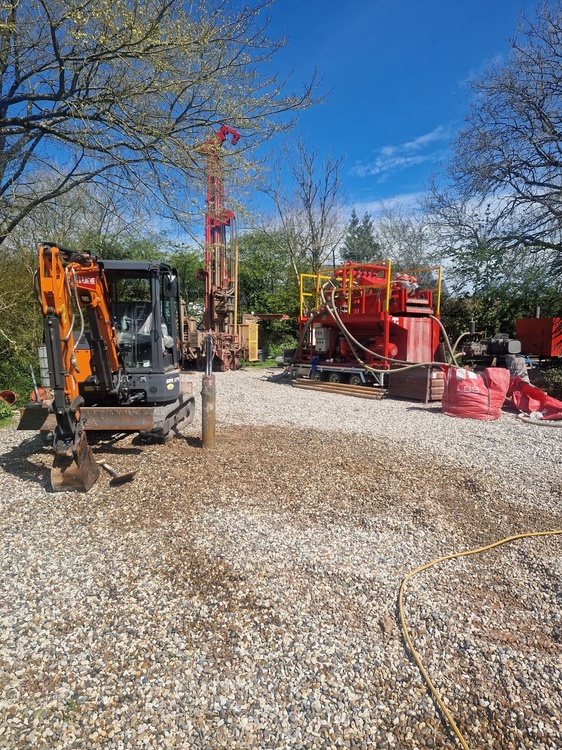
Confirm the route for the rig and support equipment, bearing capacity, overhead restrictions and the space available to work.
Provide accurate buried-service information and identify buildings, drainage, boundaries and other constraints.
Agree how drilling water, cuttings, surplus materials and protection of the surrounding site will be handled.
Coordinate trenches, manifold position, headers, penetrations and reinstatement with the appointed groundworker or principal contractor.
Final methods, materials and permissions are confirmed against the project information and conditions encountered.
A sealed collector circuit exchanges heat with the surrounding ground. Collector configuration, pipe specification, grout and spacing form part of the design.
Groundwater is abstracted and returned under a project-specific hydrogeological and permitting strategy. Investigation, abstraction and discharge requirements may apply.
Drilling fluid, casing and bore construction are selected around stability, water and the ground conditions encountered rather than assumed in advance.
A borehole is long-lived infrastructure that cannot be inspected like plant in a room. Materials, jointing, grouting, testing and records therefore matter.
Collector, joints, thermal-transfer fluid and grout are selected for the agreed design and site conditions.
Required integrity, pressure and flow checks are completed and captured for handover.
The project plan addresses groundwater protection, drilling materials and permissions relevant to the site.
Borehole and collector information supports commissioning, operation and future project decisions.
Collector, headers, manifold, heat pump, emitters, hot water and controls must be designed and commissioned together.
Explore ground source heat pumps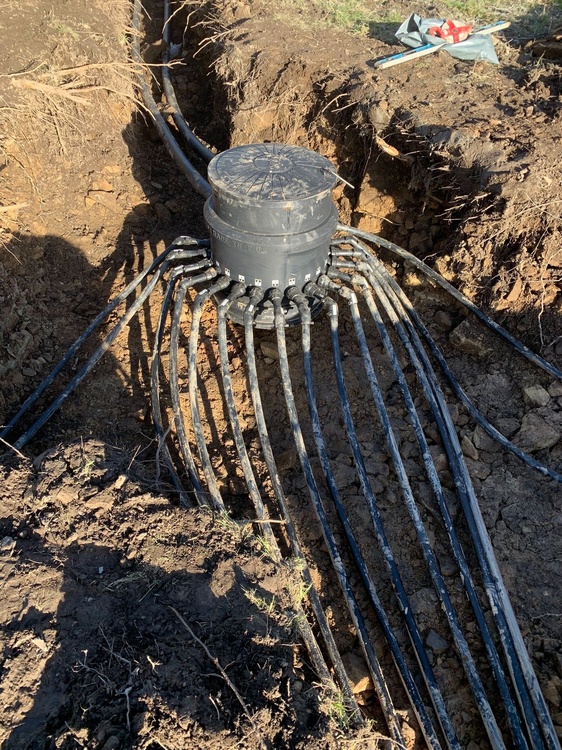
At the 44-apartment community living scheme in Cardiff, Thermal Earth designed and installed a communal ground-source system supported by fourteen boreholes drilled to 180m.
The project demonstrates how borefield, plant and building requirements can be coordinated as one scheme.
View the project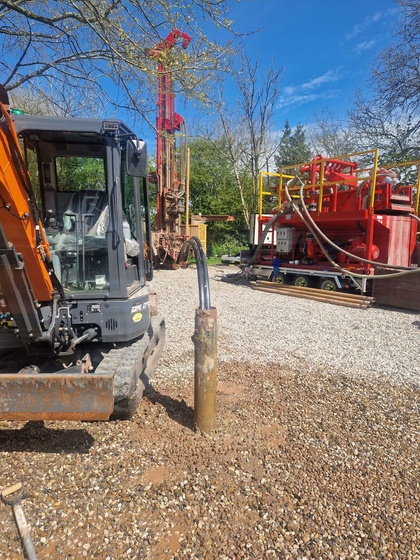
Plan rig access, work areas and the route from borehole to plant before mobilisation.
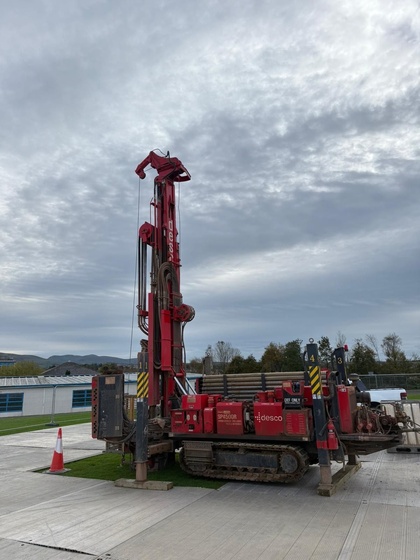
Sequencing, protection and interfaces are agreed around the wider site and its users.
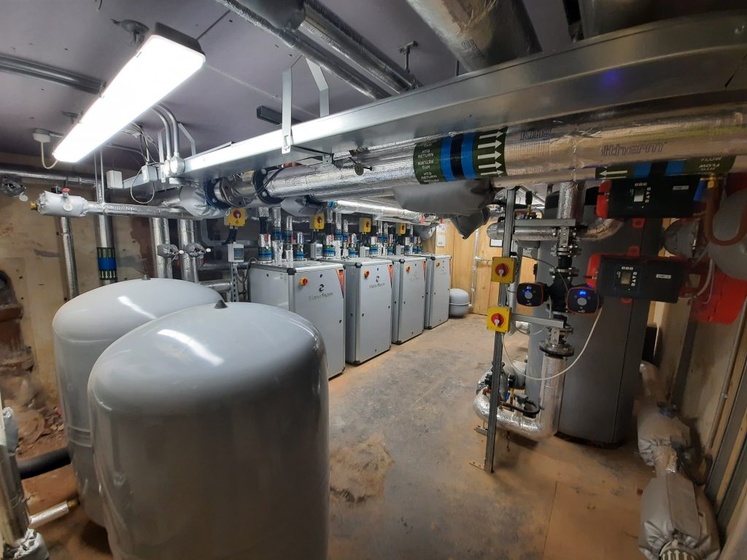
The finished ground array must serve a coordinated plant room, distribution system and controls strategy.
Tell us about the building, the site and the stage your project has reached.