Individual air source
Suits schemes where each dwelling has an appropriate external-unit position, acoustic strategy and service access.
Explore air sourceIn England, the Future Homes Standard takes effect on 24 March 2027 for non-higher-risk building work, with a 12-month transition; higher-risk buildings follow on 24 September 2027. In Wales, Approved Document L (2026) takes effect on 4 March 2027, with transitional provisions for qualifying work commenced before 4 March 2028. We work with developers and their project teams to deliver ground and air source heat-pump systems — feasibility, design, drilling, installation and handover from one accountable team.
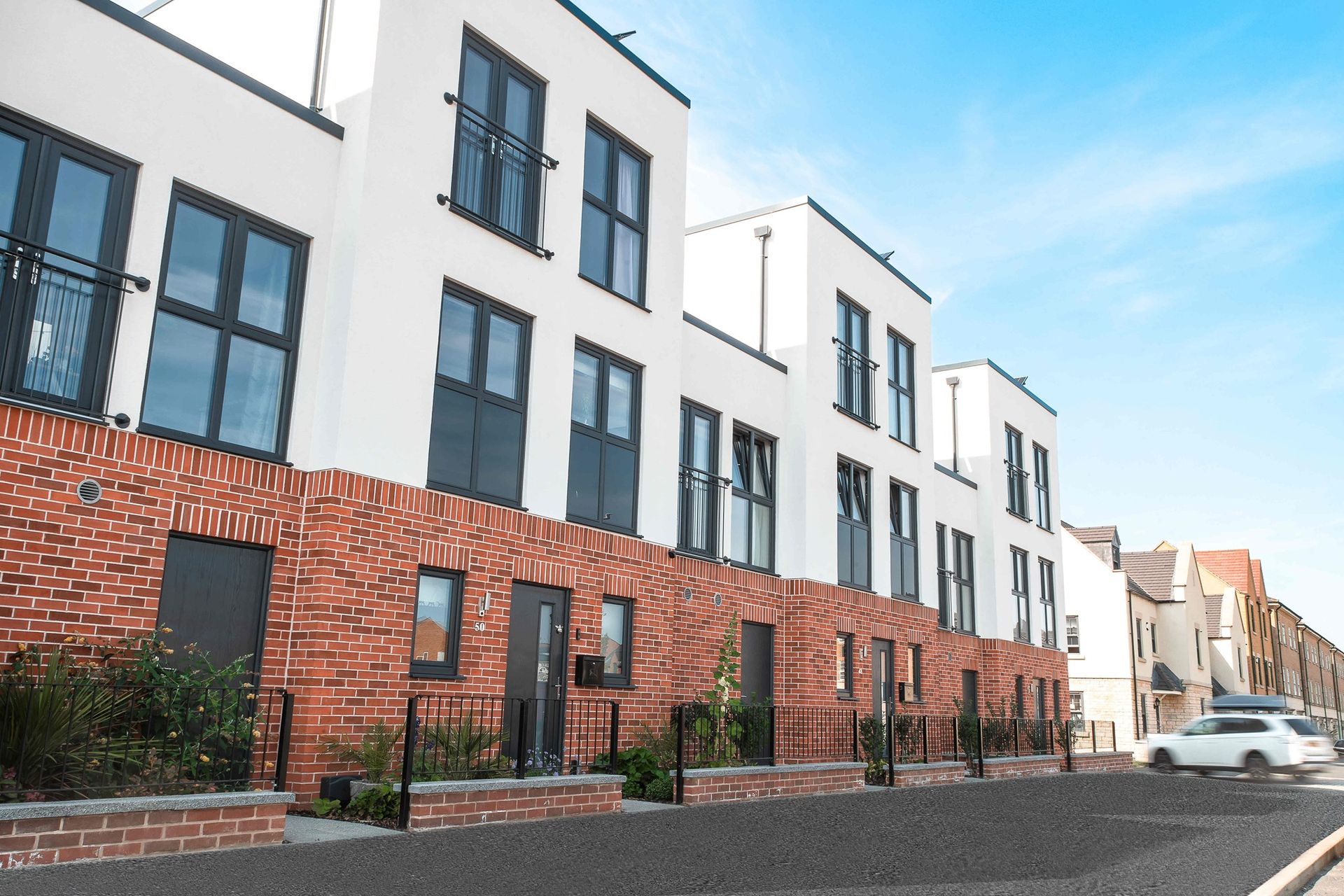
England’s Future Homes Standard and Wales’s separate Part L requirements set the direction for more efficient homes and low-carbon heating. The rules and transition that apply depend on the location, building type and when the work is notified and commenced.
A properly designed heat-pump system can support the heating strategy, with performance and running costs assessed for the homes being built. The earlier the heat source enters the design conversation, the more options a site has.
No single heat-pump arrangement suits every development — feasibility establishes which source and distribution strategy fits.
Suits schemes where each dwelling has an appropriate external-unit position, acoustic strategy and service access.
Explore air sourceIndividual dwelling control where a suitable collector strategy can be designed into the site.
Explore ground sourceA communal borehole array serves an individual heat pump in each home — the signature route for housing.
Explore shared ground loopsCentral or clustered plant for apartments, mixed-use blocks or sites where central operation fits.
Explore system design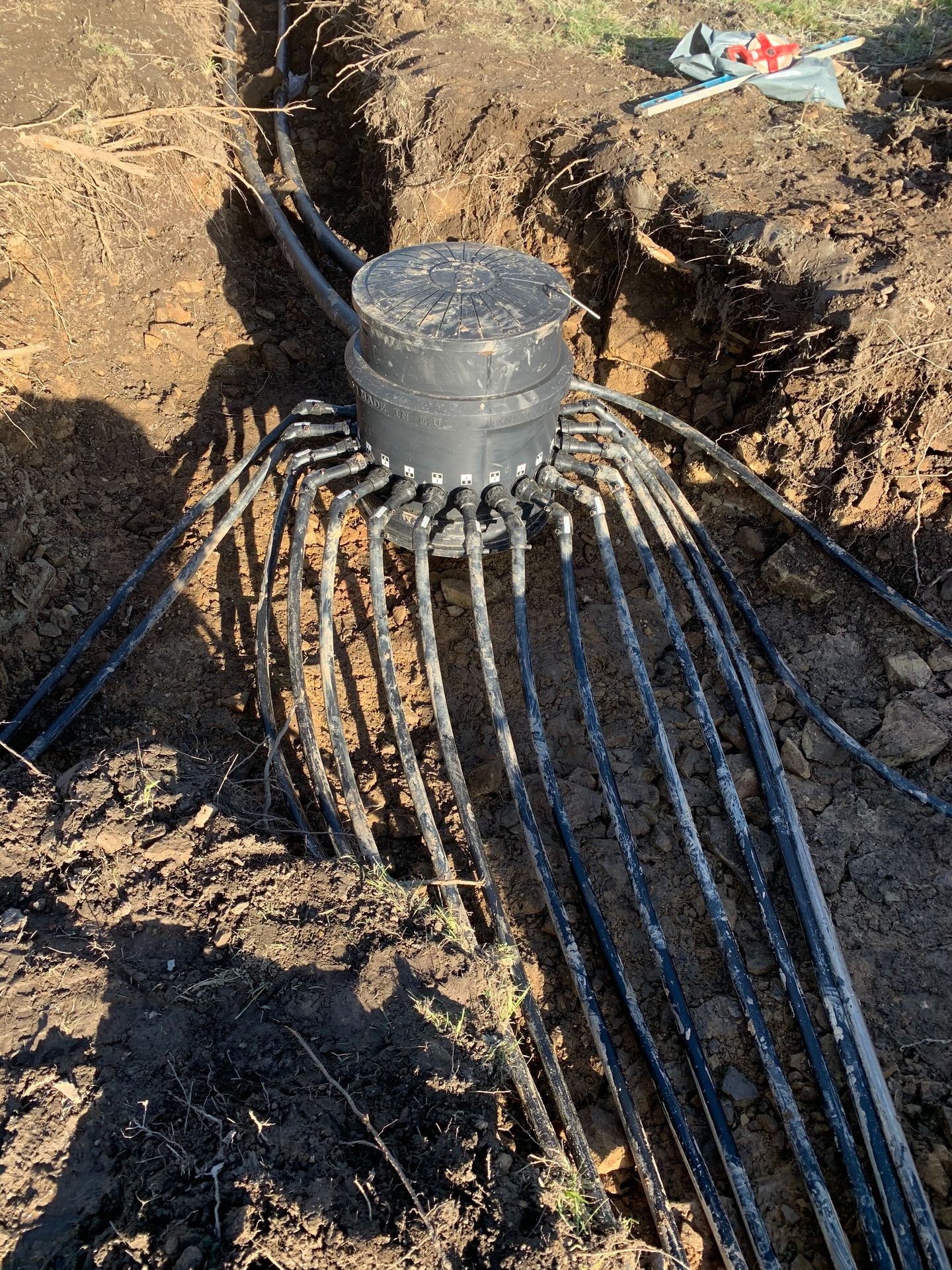
The number, depth and spacing of boreholes depend on geology and the homes’ heating and cooling loads. The shared array is sized for the development rather than assuming a fixed number of homes per borehole.
Each home keeps its own heat pump, so residents control their own heating and pay for their own energy — while the development shares the groundworks. The scope, cost and programme of the shared groundworks are assessed for the site.
Developers may retain ownership of the loop infrastructure and charge a monthly connection fee, or sell it with the properties. The utility model is subject to Ofgem heat-network authorisation and applicable consumer-protection requirements.
How shared ground loops workMasterTherm heat pumps arrive with online connectivity: residents manage temperatures and energy use from an app, while engineers can diagnose remotely — often resolving issues without a site visit.
Systems are designed for service lives of around 20–25 years, with low noise operation and a single annual service keeping them at their best. That is a strong story to tell a buyer.

Review demand, site constraints, source options, phasing and project objectives.
Develop the source, plant, distribution, dwelling and controls strategy together.
Our in-house teams drill and test the borefield around the build programme.
Install the agreed scope and manage the interfaces that affect system operation.
Prove operation, capture records and explain the agreed support route.
A new-build housing scheme, a supply project and a refurbishment from our published Success Stories.
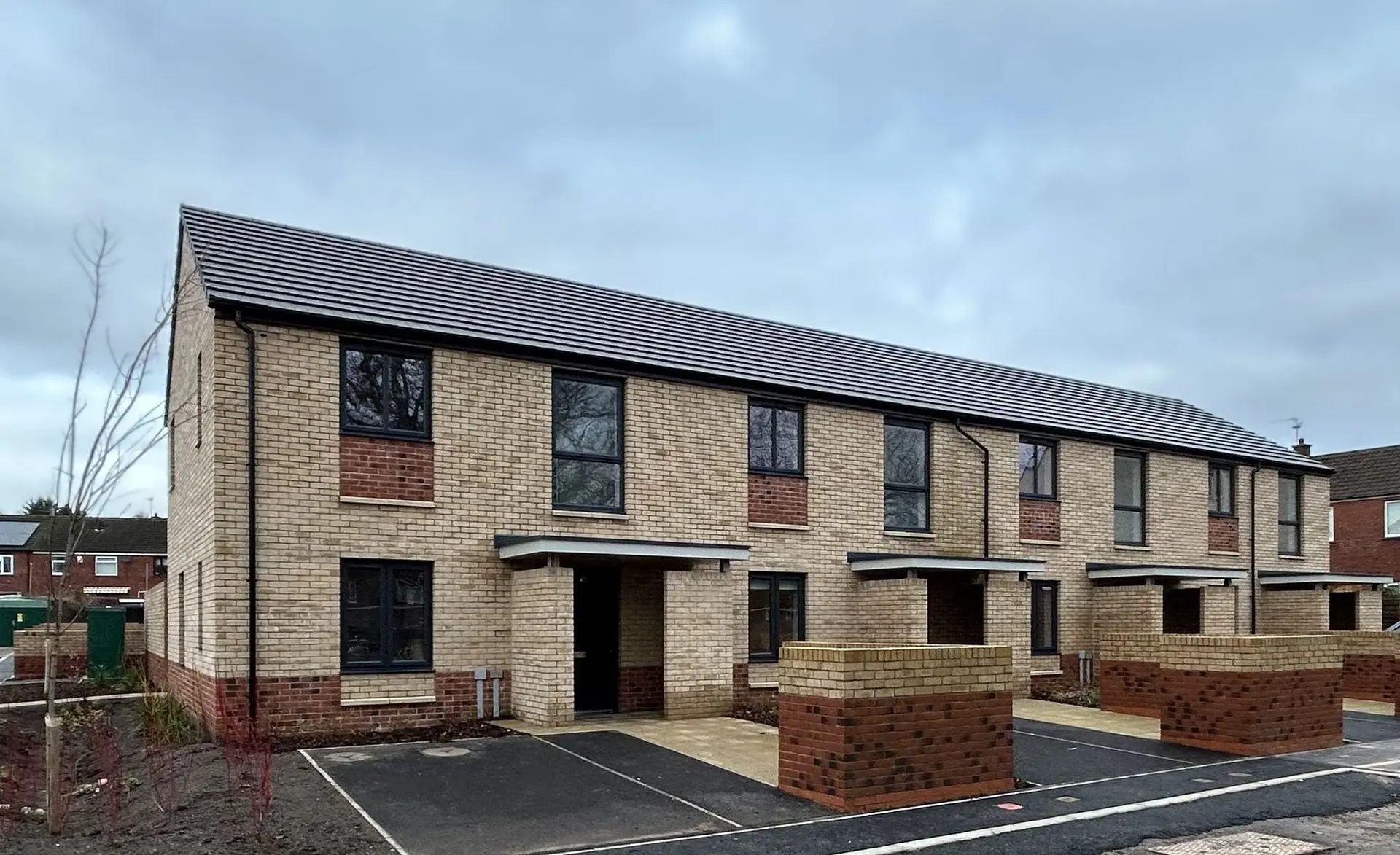
Five 150m boreholes serve 13 individually controlled ground source heat pumps at Brookfield Drive.
Read the project story
Consultation and supply of MasterTherm AquaMaster Inverter Combi ground source heat pumps for Etopia’s homes in Corby.
Read the project story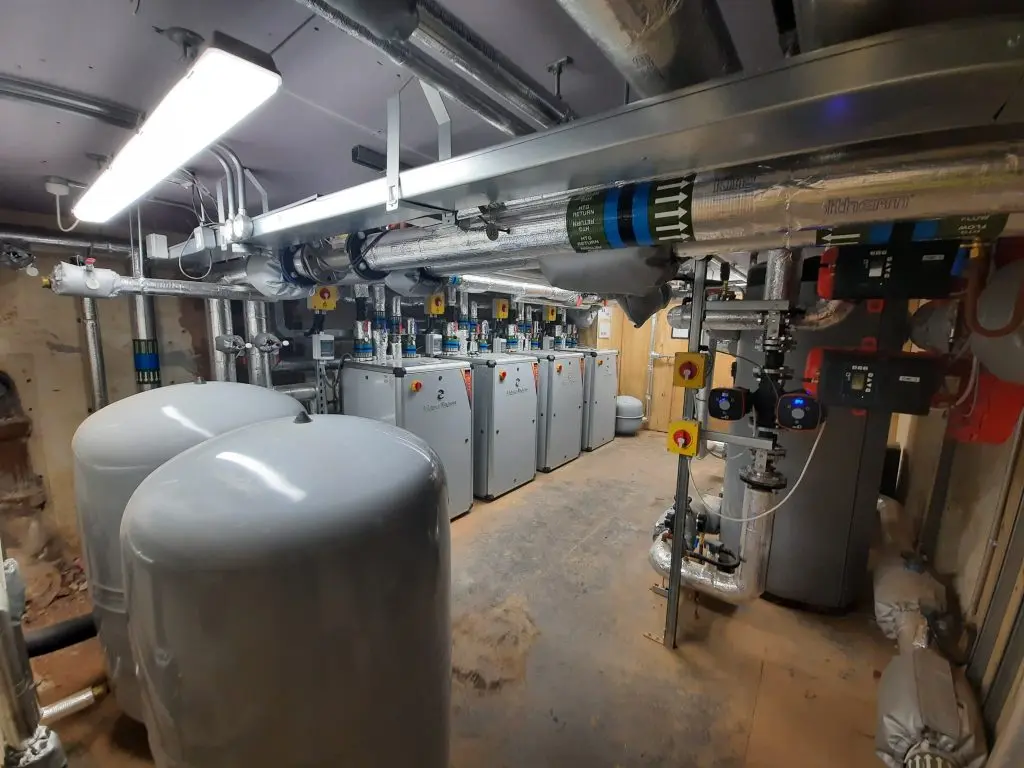
An Exeter refurbishment with four MasterTherm AquaMaster AQ90i heat pumps in a hybrid ground-source and gas heating system.
Read the project storyTell us about the homes, the site and the programme. We'll help establish the next practical design step — and whether a shared ground loop fits your scheme.