Skip to Content
Shared ground loops

Shared ground. Individual comfort.

A communal closed ground or water loop can serve an individual heat pump in each home. Thermal Earth joins feasibility, source-array design, drilling where required, installation and commissioning into one coordinated delivery route.

20+ years operating4,000+ systems installedIn-house drilling
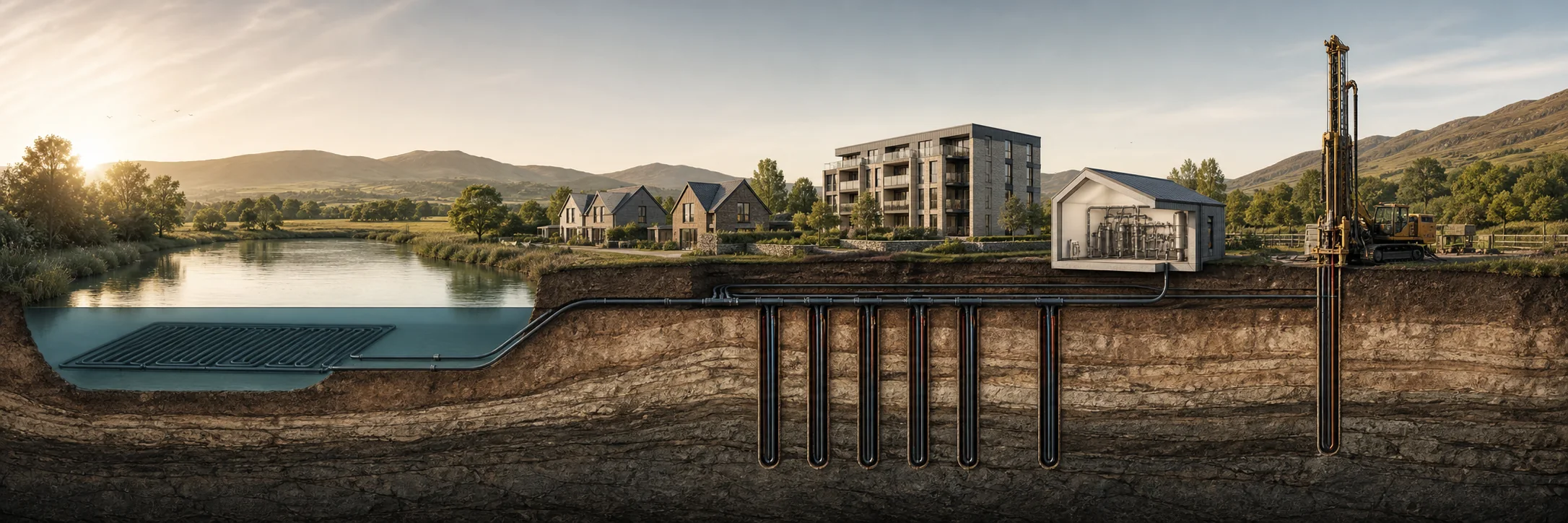
Conceptual landscape showing shared ground energy serving a group of homes
Conceptual editorial illustration. Loop configuration and dwelling connections are designed for each scheme.

5

boreholes

150m

borehole depth

13

individual heat pumps

One

shared ground array

Cardiff Living at Brookfield Drive: five 150m boreholes serving 13 individual ground-source heat pumps.

  1. Communal sourceBoreholes or another closed ground or water array exchange low-temperature heat with the environment.
  2. Closed ambient networkPaired flow and return pipework carries source energy around the development.
  3. Individual home plantEach property's own heat pump, controls and hot-water system operate independently.

System arrangement only. Source, pipe routes, ownership, metering and service boundaries are designed for each project.

How it works

Shared source infrastructure, a heat pump in each home.

1

Collect

Communal boreholes or another closed ground or water array exchange low-temperature heat with the environment.

2

Share

A closed ambient loop distributes that source energy across the development.

3

Control individually

Each dwelling's heat pump upgrades the heat for its own heating and hot water under its own controls.

Designed for the whole scheme

Project priorities and resident needs, considered together.

For the project team

  • Coordinated infrastructure

    Ground array, distribution loop, dwelling interfaces and programme are designed as a system.

  • Site-specific borehole strategy

    Heat demand, geology, spacing, access, phasing and available land inform the array.

  • Clear operational model

    Ownership, metering, maintenance and regulated responsibilities can be established before handover.
For residents

  • Individual comfort control

    Each dwelling has its own heat pump and controls rather than relying on a central hot-water generator.

  • Dwelling-level serviceability

    Individual heat pumps can be accessed and supported without treating every home as one appliance.

  • Connected support

    Controls and monitoring options are selected for the specified system and operating model.

Feasibility questions

Is a shared loop the right route for this scheme?

The answer depends on more than dwelling count.

Heat demand

Dwelling loads, diversity and hot-water requirements establish system and loop demand.

Ground and site

Geology, available working space, buried services, access and phasing shape the array.

Dwelling integration

Plant space, emitters, storage, controls, acoustics and electrical provision must work in every home.

Ownership and operation

Asset boundaries, charging, metering, maintenance and consumer responsibilities should be agreed early.

Integrated delivery

From feasibility to long-term support.

01

Feasibility

We review loads, site constraints, ground information, programme and the proposed operational model.

02

Design

Ground array, distribution loop, dwelling systems, controls and interfaces are coordinated.

03

Source works and installation

Our teams coordinate groundworks, boreholes where required, loop infrastructure and dwelling installations with the project.

04

Commission and support

We commission the integrated system, support handover and offer ongoing service arrangements.

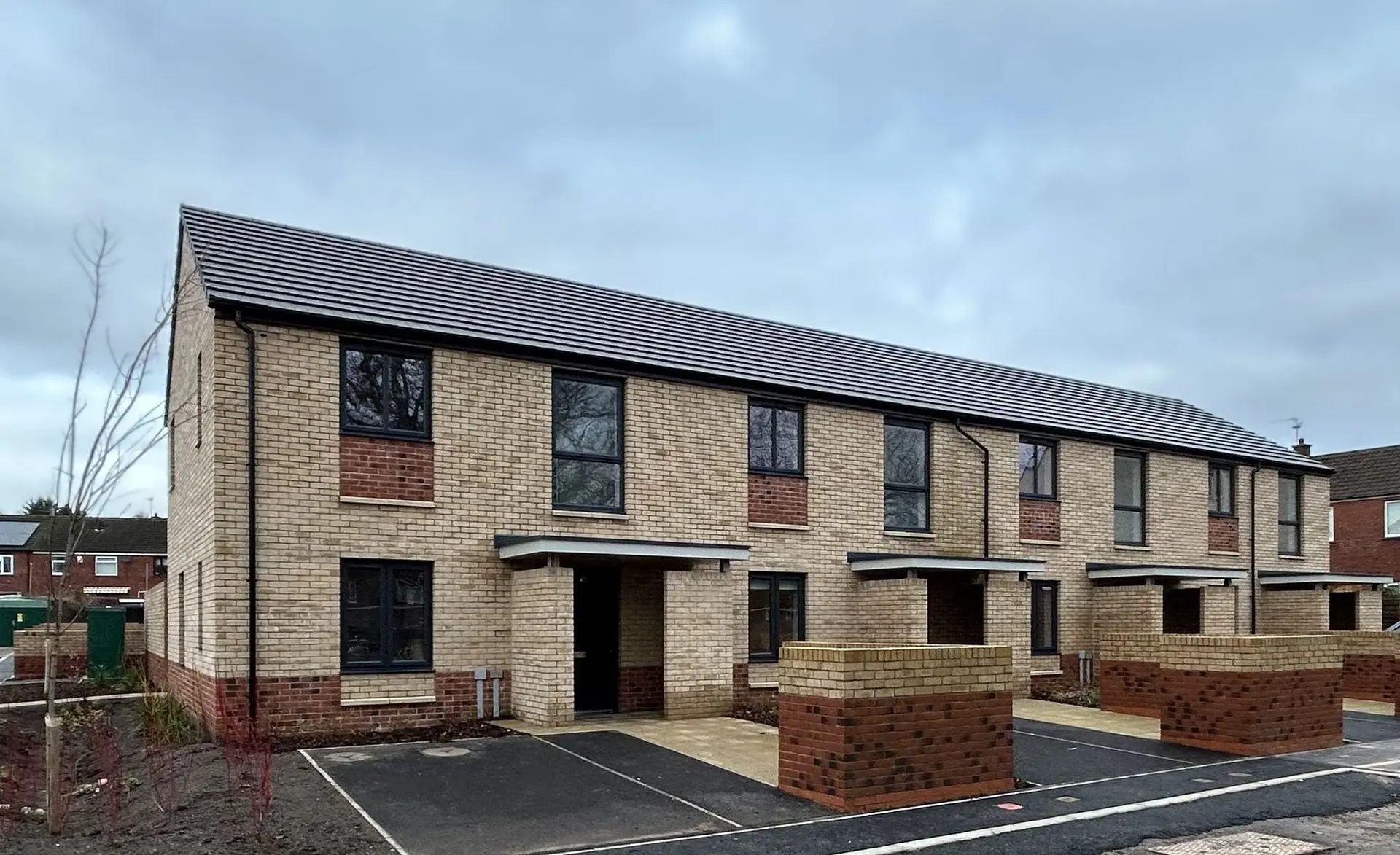
Cardiff Living homes served by a shared ground loop at Brookfield Drive
Delivered project

Shared ground, individual control at Brookfield Drive.

Five boreholes, each drilled to 150m, serve 13 individual MasterTherm ground-source heat pumps across this Cardiff Living scheme.

Each home has control of its own heating and hot water while drawing source energy from the communal ground array.

View the Cardiff Living project
Plan the operating model early

Ownership and consumer responsibilities are part of the design.

Shared ground-loop heat networks in Great Britain are within Ofgem's heat-network regulatory framework, although some obligations are reduced. Each scheme must identify who is acting as operator and, where applicable, supplier, and those parties must meet the authorisation, registration and consumer-protection requirements that apply to their roles.

Thermal Earth can coordinate the technical system with the appointed project advisers and intended operator. Legal, commercial and regulatory responsibilities should be confirmed for the particular scheme.

Discuss your project structure
Funding depends on the property

Some shared-loop heat pumps may qualify for grant support.

Eligibility is assessed for each property. Most new-build properties and social housing are excluded, while eligible self-builds can qualify. The individual heat pumps and the shared-loop system must meet the scheme rules in force when an application is made.

Common questions

Shared ground loops, in plain English.

In the arrangement described here, yes. The homes share the low-temperature source loop, while each dwelling's heat pump provides its own heating and hot water under individual controls.

There is no reliable universal number. Borehole depth and spacing, geology, thermal response, dwelling loads, diversity and the overall array design determine capacity.

Not usually. A shared loop distributes low-temperature source energy to individual heat pumps rather than distributing centrally generated hot water. Both can still involve heat-network responsibilities, depending on their structure.

No automatic entitlement applies. The heat pump and property must satisfy the current rules. Most new-build properties and social housing are excluded, although eligible self-builds can qualify. We check the proposed route against the scheme in force.
Start at feasibility

Planning a multi-home heating scheme?

Bring us in early to coordinate heat demand, ground infrastructure, dwelling systems and the delivery programme.