The heat pump that warms your winter can cool your summer.
Modern, well-insulated homes hold on to heat brilliantly — which is exactly why they can get uncomfortably warm in July. A ground source heat pump can cool your home using the same boreholes that heat it, so summer comfort comes from the system you already own.
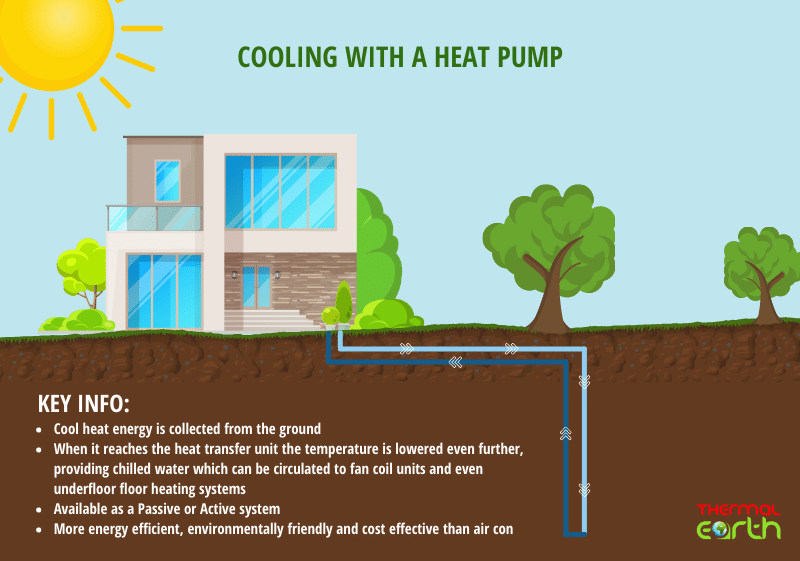
Your garden stays cool all summer. Your home can borrow that.
A correctly designed ground array can provide a cooler source than warm rooms in summer. The available cooling depends on the ground temperature and how the array has been used. Free cooling (engineers call it passive cooling) simply circulates fluid between your warm rooms and that cool ground.
The heat pump's compressor never starts — only the circulation pumps run — so free cooling uses very little electricity. Heat rejected in summer can help regenerate the ground array. The effect on winter performance depends on the array design and seasonal balance.
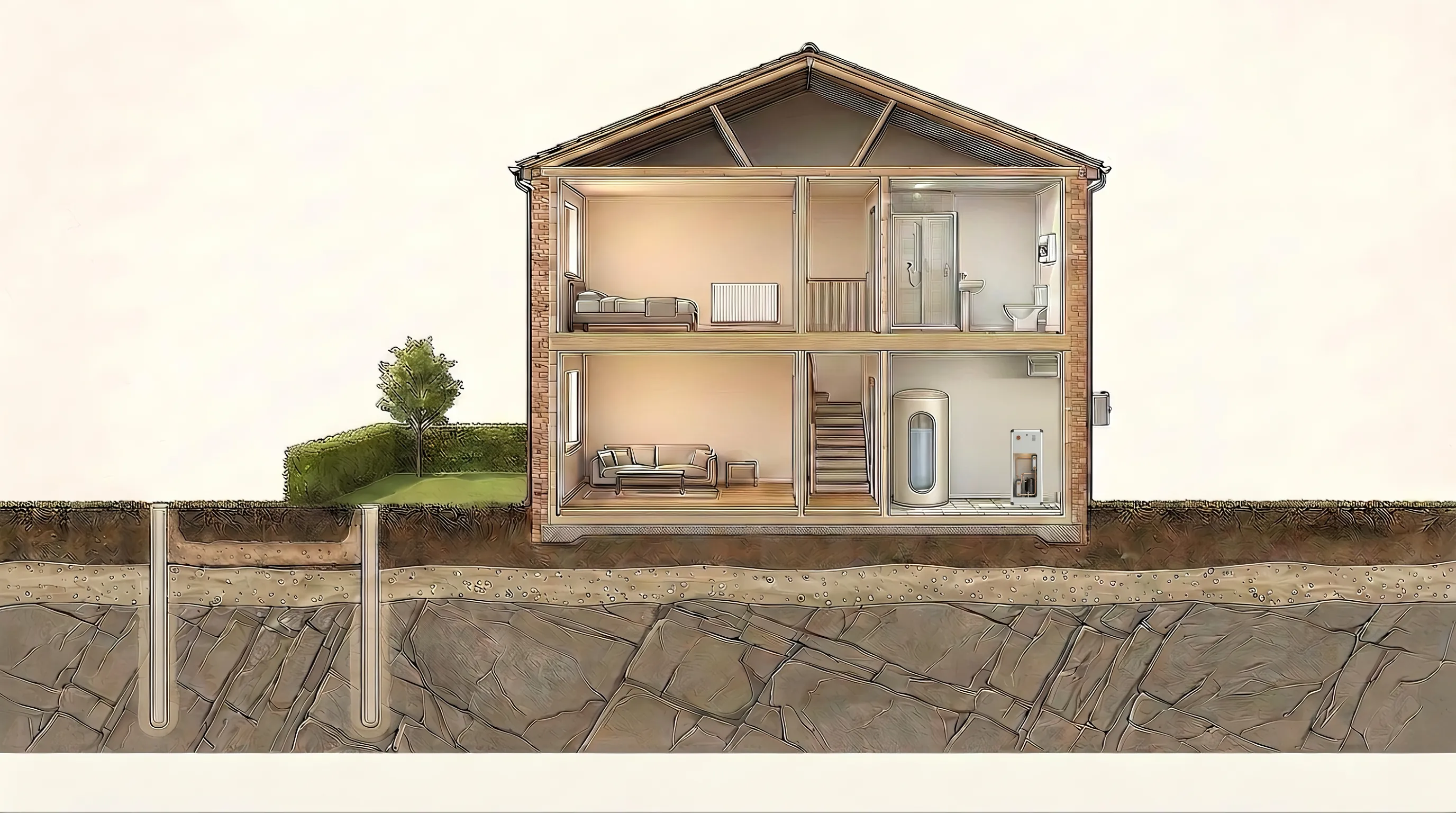
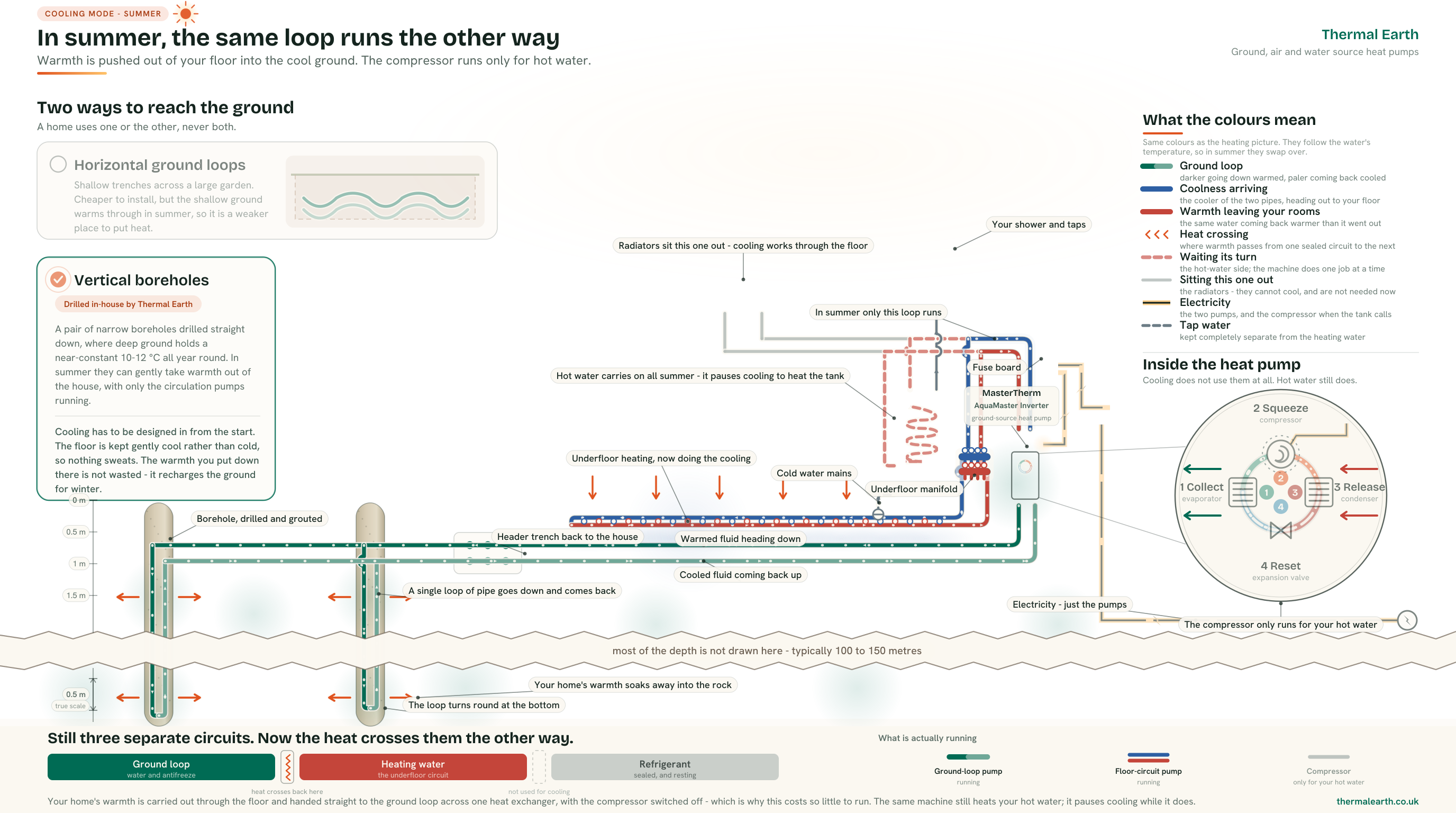
Scroll the picture sideways to see all of it. Every label is written out below.
How a ground-source heat pump cools the same house in summer - passive cooling
What is in the picture
- Ground loop: warmed fluid down the boreholes, cooled fluid back Borehole, drilled and grouted; Header trench back to the house; A single loop of pipe goes down and comes back; The loop turns round at the bottom; Cooler fluid going back down; Warmed fluid coming up
- Floor circuit: cool water out to the floor, warmer water back Underfloor manifold; Hot-water cylinder; Heating coil - heating water never mixes with your tap water; Underfloor heating in the screed; Radiator; Warm water out; Cooler water back
- Electricity from the grid, running the pumps Electricity from the grid; Fuse board
- Tap water, kept completely separate from the heating water Your shower and taps; Cold water mains
- Refrigerant sealed inside the heat pump, resting
The four steps inside the heat pump
- 1 Collect evaporator Environmental energy warms the refrigerant until it boils. It leaves as a warm gas at low pressure.
- 2 Squeeze compressor Electricity drives the compressor, squeezing that gas into a much smaller space. It leaves hot and at high pressure.
- 3 Release condenser The hot gas hands its heat to your heating water and condenses. It leaves as a hot liquid, still at high pressure.
- 4 Reset expansion valve A valve drops the pressure and the liquid flashes cold. It leaves as a cold mist, ready to collect more.
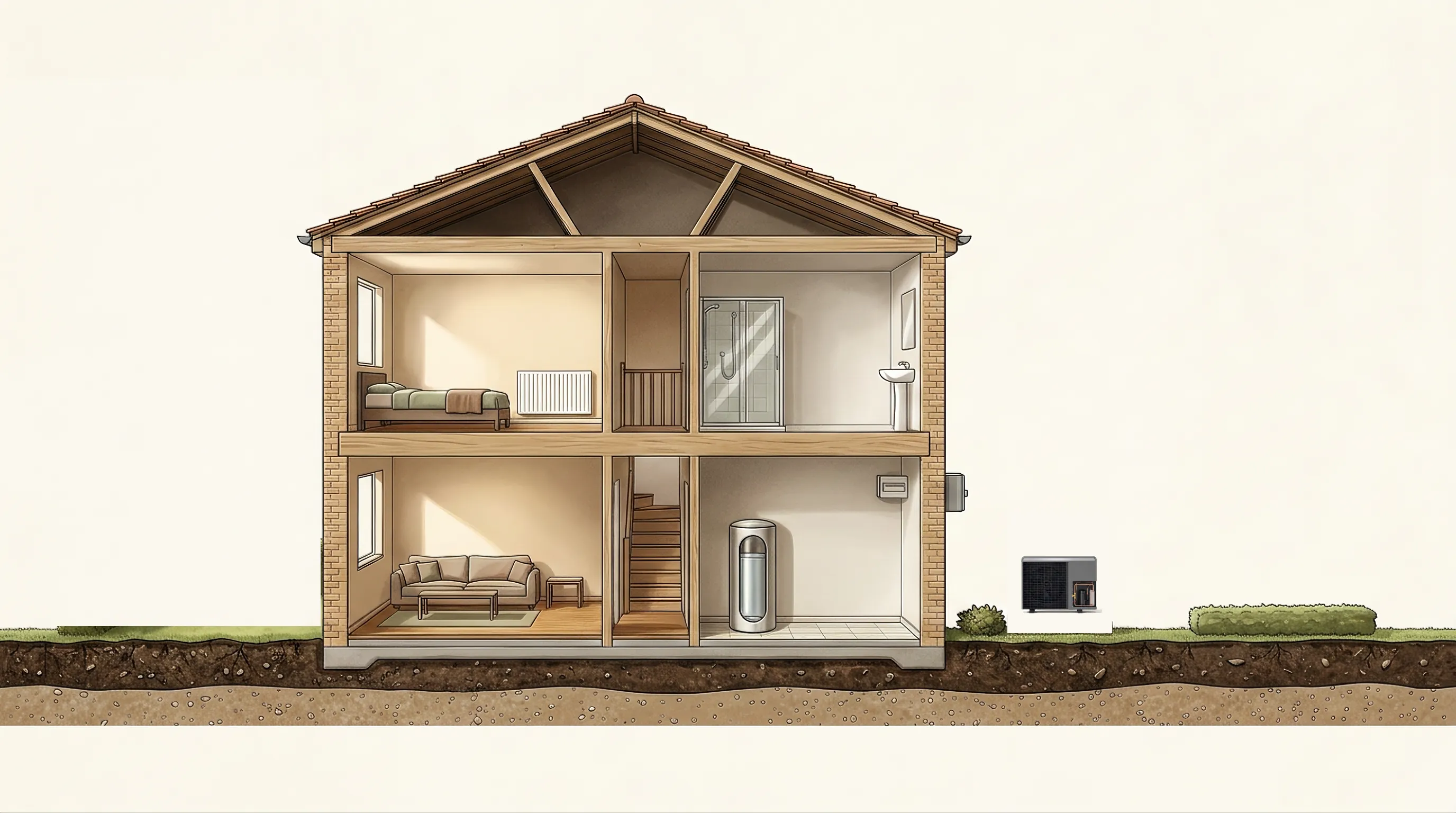
Scroll the picture sideways to see all of it. Every label is written out below.
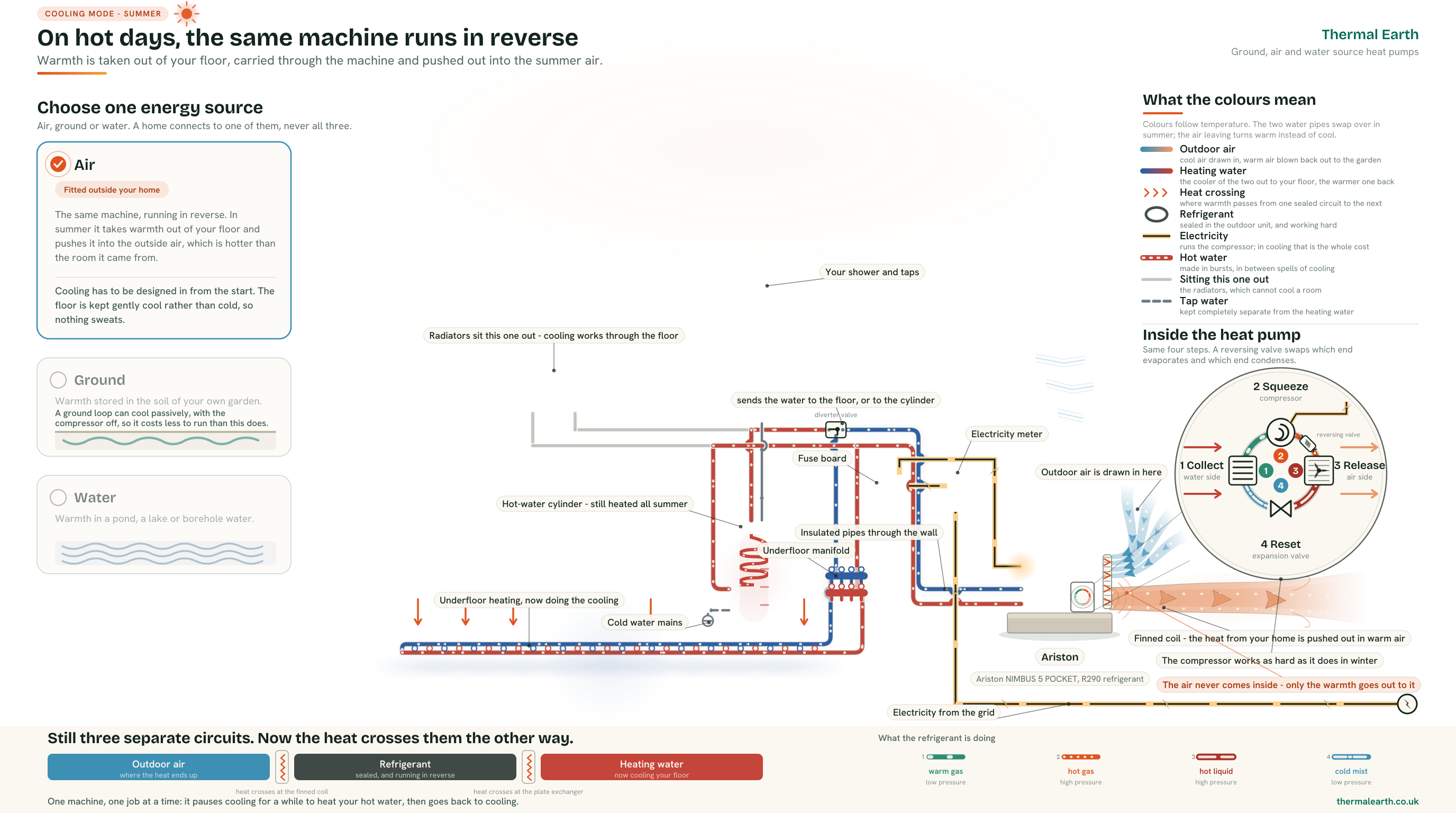
How an air-source heat pump cools the same house in summer
What is in the picture
- Floor circuit: cool water out to the floor, warmer water back Insulated pipes through the wall; Hot-water cylinder; Heating coil - heating water never mixes with your tap water; Underfloor heating in the screed; Underfloor manifold; Radiator; Warm water out; Cooler water back
- Electricity from the grid, running the compressor Electricity meter; Fuse board; Electricity from the grid
- Tap water, kept completely separate from the heating water Your shower and taps; Cold water mains
- Outdoor air: in at the coil cooler, out again a few degrees warmer Outdoor air is drawn in here; The same air is blown out here, a few degrees cooler; Finned coil - the air gives up its warmth here
- Refrigerant sealed inside the outdoor unit, running in reverse
The four steps inside the heat pump
- 1 Collect evaporator Environmental energy warms the refrigerant until it boils. It leaves as a warm gas at low pressure.
- 2 Squeeze compressor Electricity drives the compressor, squeezing that gas into a much smaller space. It leaves hot and at high pressure.
- 3 Release condenser The hot gas hands its heat to your heating water and condenses. It leaves as a hot liquid, still at high pressure.
- 4 Reset expansion valve A valve drops the pressure and the liquid flashes cold. It leaves as a cold mist, ready to collect more.
Free cooling for most summers. Active cooling for hot ones.
Neither is "better" — it depends on how warm your home actually gets. We'll tell you honestly which fits.
Free cooling
Gentle, near-silent cooling that takes the edge off warm rooms — like the house staying comfortable on a day everyone else is complaining about.
- Only the circulation pumps run, so it uses very little electricity
- Best for homes that get warm, but not sweltering
- Recharges the ground for more efficient winter heating
- A simple addition to a ground source system
Active cooling
The heat pump runs in reverse and moves heat out of your home into the ground — proper air-conditioning-level cooling, held at the temperature you choose.
- Holds a set temperature even on the hottest days
- Comparable to conventional air conditioning
- Uses the compressor as well as circulation pumps; electricity use depends on the cooling duty and system design
- Sized against your ground array at the design stage
How the coolness reaches your rooms.
Cooling needs the right delivery — and we'd rather tell you the honest limits now than after the concrete is poured.
Underfloor heating, in reverse
Cool water through the same underfloor pipes gives gentle, even cooling across the whole floor. A dew-point controller manages the water temperature so the floor never drops below the condensation threshold — cool underfoot, never damp.
Fan coil units
Compact room units that blow air over a chilled coil — quicker, more controllable cooling for the rooms that need it most, like a bedroom under the roof.
What about radiators?
Radiators can't cool a room — they only work in one direction. If your system heats through radiators alone, cooling means adding fan coil units or underfloor pipework, and we'll tell you plainly whether that's worth it in your home.
Cooling is a design decision, not an add-on.
Not every heat pump has cooling capability built in. The right equipment, pipework and controls need to be in the design from the first drawing — so if you're building, extending or planning a heating upgrade, tell us about summer at the same time you tell us about winter.
Already have a ground source system? Cooling can sometimes be added later — it depends on your heat pump and how your home distributes heat. We'll assess it honestly rather than promise first and survey after.
The things homeowners ask about cooling.
Start with the ground
Ground source can provide passive or active cooling when specified for it. Suitable reversible air source models can also provide active cooling, with the right room units and controls. Ask us to check the model and design for your home.
Ground source heat pumpsCooling a bigger building?
For commercial cooling — offices, schools, plant rooms and whole-building systems — we cover the technical detail on its own page.
Commercial cooling systemsLooked after, all year
One Comfort Care plan covers the system that heats and cools your home — annual service, monitoring and priority support.
Comfort Care planOne system for warm winters and cool summers.
Tell us about your home — how it heats, and how warm it gets in July. We'll tell you honestly whether free cooling, active cooling or neither is the right fit.
No EPC? Send an enquiry or call 01269 833100. We can check the evidence needed for your property.
Prefer to chat? Call us on 01269 833100 — no call centre.